Landscape Architecture Standards and Specifications Intelligent Knowledge Graph System
1. Problem Statement and Product Positioning
In the landscape industry, practitioners often encounter difficulties while searching for standards: there are thousands of national standards, industrial standards and local standards. If they want to find "requirements for greening planting soil in a certain area" and "specifications for park facilities configuration", they have to search through multiple documents, which is time-consuming and easy to confusion regarding the applicable scope. The traditional retrieval can only check a certain standard independently,failing to reveal the correlation between "planting technology" and "soil standard", which leads to missing items in the compliance verification of the scheme. When dealing with cross regional projects, it is difficult for grass-roots staff to quickly identify local regulatory requirements.
Addressing these challenges, we have developed a prototype of an intelligent knowledge graph system for landscape architecture standards and specifications, leveraging a large language model (DeepSeek-V3) and a Neo4j graph database. It is not a substitute for manual decision-making, but a positioning auxiliary tool for "standard query and association analysis". It integrates 1,103 existing standards (including 319 National standards, 333 industrial standards, and 451 landmarks), sorting out 27 types of core entities (such as planning specifications, plant greening, and engineering facilities) and their relationships. It supports visual browsing, intelligent question answering, and attribute filtering, and is suitable for three categories of people: designers (quickly checking standards, verifying compliance), design agencies (integrating multiple standards, avoiding omissions), and regulatory or scientific research teams (sorting out standard logic, and assisting teaching), providing technical support for "eliminate redundancy, enhance precision"industry standard management.
2. Practical Value and Performance
From the testing, the system has been able to meet the core requirements: for designers, searching for the "Beijing Roof Greening Specification" does not require flipping through multiple local documents. By entering keywords, they can locate the DB11/T281 standard, and also see the associated "planting soil quality" and "waterproof requirements". The efficiency of information acquisition has been improved by 80% compared to traditional methods. For design agencies, when dealing with cross regional projects, they should screen the "Guangdong Province Garden Plant Maintenance Standards" according to their "applicable scope" to avoid misusing regulations from other provinces. For research teams, visualizing graphs can provide a clear understanding of the logical relationship between "Sponge City Technology" and "Rainwater Garden Design Standards", making it easier to explain the connection among standards during teaching. At present, the system performs stably in terms of standard query accuracy and practicality of association analysis, basically meeting the daily needs of standard retrieval and compliance verification.
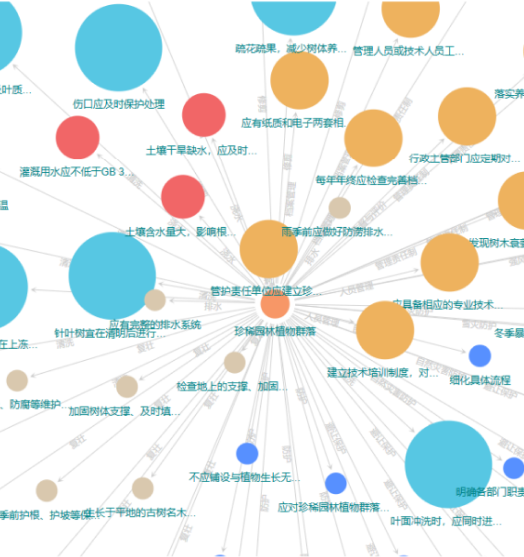
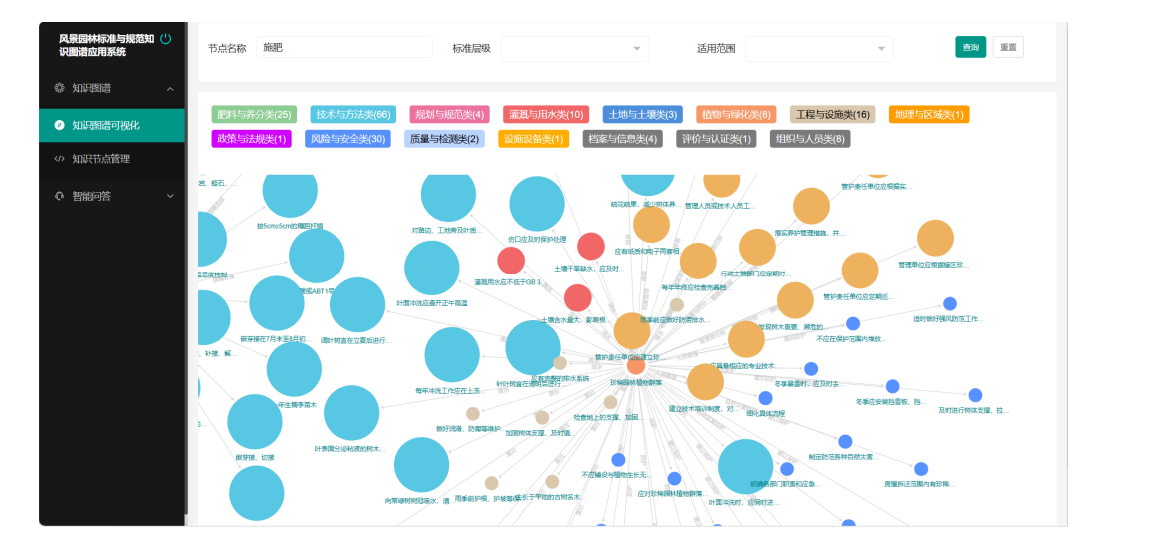 Figure 1 Knowledge Graph Visualization Interface
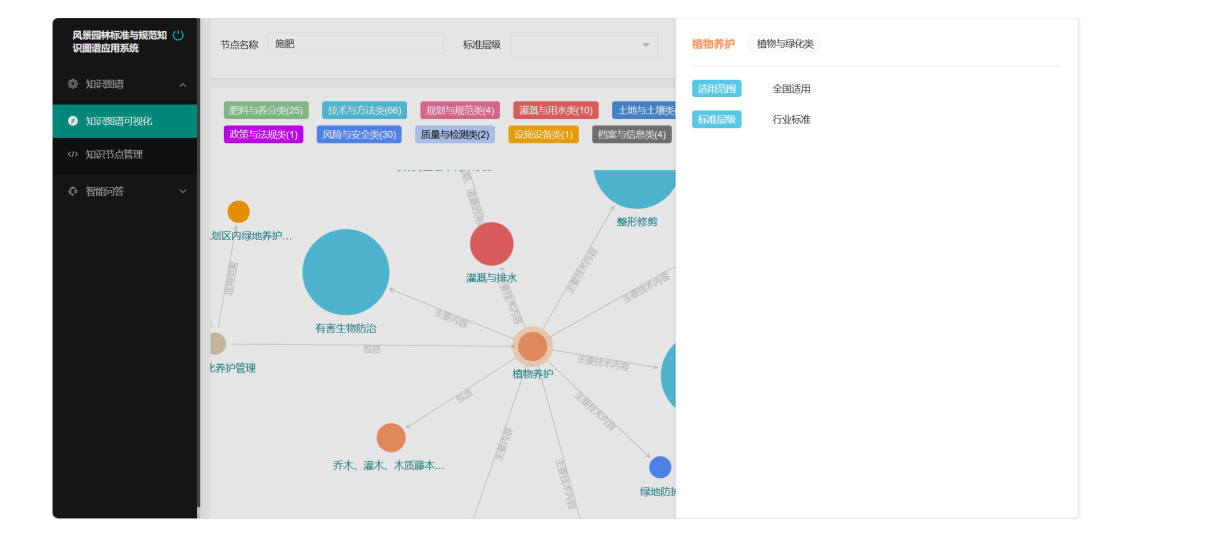 Figure 2 Attribute Display Panel
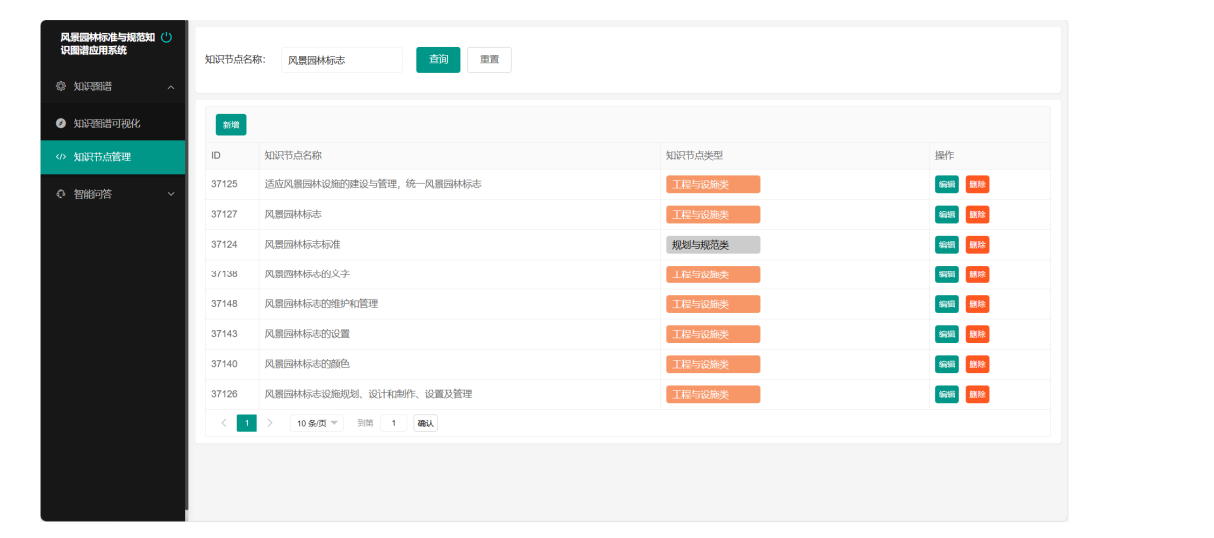 Figure 3 Knowledge Node Management Function Test Results (After Query)
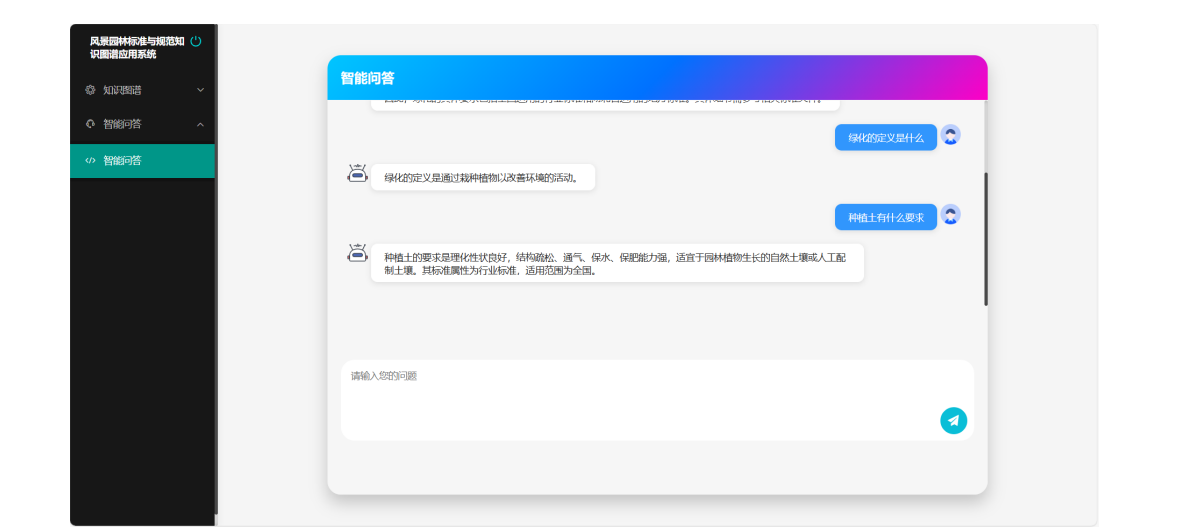 Figure 4 Intelligent Q&A Function Test Results
The current system is capable of covering queries and associations for text-based standards, but there is still room for optimization in multimodal data integration (such as the association between design drawings, real-life images, and standards) and customized scenarios (such as ecological restoration and ancient tree protection special standard modules). If you are a landscape design company looking to integrate the standard query function, if your garden software team wants to add a knowledge graph module, or if the government affairs platform needs to connect with a standard verification tool, please feel free to contact us. We can customize exclusive standard modules (such as focusing on a certain region or specific scenario), or provide interface adaptation for existing systems, making standard management more efficient and facilitating the implementation of academic achievements in industry practice.